Posted by
Justin M. Wachs, Sr., J.C.D. |
Sep 21, 2026 |
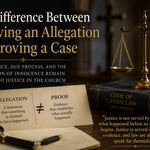
A sincere allegation is not the same as proven fact. In canonical proceedings, justice requires more than accepting accusations at face value. This article explores why evidence, due process, and the presumption of innocence remain essential safeguards in the Church's pursuit of truth.
Continue Reading
Posted by
Justin M. Wachs, Sr., J.C.D. |
Aug 31, 2026 |
When is a canonical warning necessary in religious life? Religious superiors have both pastoral and juridical responsibilities when addressing persistent disobedience. Learn why canonical warnings remain an essential tool of good governance.
Continue Reading
Posted by
Justin M. Wachs, Sr., J.C.D. |
Aug 31, 2026 |
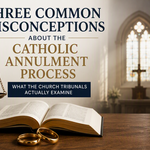
Many Catholics misunderstand what a declaration of nullity actually means. This article explains that the tribunal's role is not to erase a marriage, judge its success by its duration, or assign blame for its breakdown. Instead, the Church seeks to determine whether a valid marital bond arose at the time consent was exchanged.
Continue Reading
Posted by
Justin M. Wachs, Sr., J.C.D. |
Aug 13, 2026 |
Many canonical disputes can be avoided through timely legal guidance and thoughtful planning. This article examines the value of preventive canonical counsel and how early consultation can help clergy, religious institutes, dioceses, and lay faithful protect rights, strengthen governance, and prevent future conflicts.
Continue Reading
Posted by
Justin M. Wachs, Sr., J.C.D. |
Aug 13, 2026 |
The Church's legal tradition seeks justice through the careful pursuit of truth, not through expedient decisions or popular opinion. This article explores why due process, the protection of rights, and a thorough examination of facts remain essential to sound ecclesiastical governance and the administration of justice within the Church.
Continue Reading
Posted by
Justin M. Wachs, Sr., J.C.D. |
Jan 28, 2025 |
While an accuser has a right to his version of the story, he or she does not have a right to the truth. Hence a good defense focuses on the facts - as they do not lie - and the just application of the law in pursuit of justice and the truth of the matter.
Continue Reading
Posted by
Justin M. Wachs, Sr., J.C.D. |
Jan 28, 2025 |
"Where there is no malice there can be no offense.” - Sir Thomas More
This basic principle of law (regula iuris) is found in canon 1321 of the 1983 Code of Canon Law (CIC). Its legal implication was strengthened in the recent revision of the Penal Code (Book VI of the CIC) promulgated by Pope Fr...
Continue Reading
Posted by
Justin M. Wachs, Sr., J.C.D. |
Jan 28, 2025 |
Sir Thomas More: You threaten like a dockside bully.Sir Thomas Cromwell: How should I threaten?Sir Thomas More: Like a minister of state, with justice!Sir Thomas Cromwell: Oh, justice is what you're threatened with.Sir Thomas More: Then I am not threatened.
Sadly, this exchange still rings all t...
Continue Reading
Posted by
Justin M. Wachs, Sr., J.C.D. |
Jan 28, 2025 |
When the standard of proof during an ecclesiastical preliminary investigation is that "it could have happened", as occurs all too often, the "deepest sin against the human mind" is committed. Anyone can pull together the name of a priest, the time frame, and the place and lodge a complaint. Accor...
Continue Reading